Should you hire a professional or plan your wedding yourself? This wedding planner vs DIY planning pros cons comparison breaks down the real differences in cost, time, stress, and outcomes so you can choose the path that genuinely fits your budget, timeline, and personality. There is no universally correct answer — only the right answer for your specific wedding.
Wedding Planner vs DIY Planning: A Neutral Overview
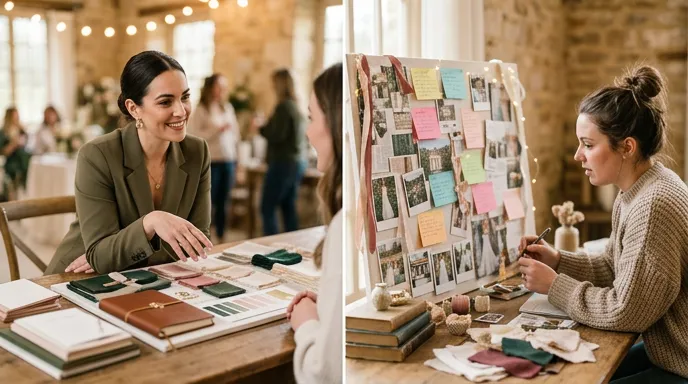
A wedding planner is a professional who manages vendor coordination, budgeting, timelines, and logistics on your behalf. DIY planning means the couple handles every decision and booking themselves, typically with help from family and friends. Both approaches can produce a beautiful wedding day — the difference lies in who carries the workload and how much control you want to retain.
Quick Overview: Wedding Planner
A wedding planner brings industry contacts, negotiation experience, and a structured process to reduce decision fatigue. Couples who hire planners often save time and avoid common scheduling pitfalls. This option typically adds a service fee on top of your overall wedding budget.
Quick Overview: DIY Planning
DIY planning gives couples full creative control and can reduce costs if managed carefully. It requires significant time investment — research, vendor outreach, contract review, and day-of coordination. This route works best for organized couples who enjoy hands-on project management.
Comparison Criteria: What Actually Matters
Before deciding between a wedding planner and DIY planning, weigh these factors against your own circumstances:
- Budget allocation — how much you can set aside for professional fees versus DIY tools
- Available time — hours per week you can realistically dedicate to planning
- Stress tolerance — how you handle last-minute problem-solving
- Vendor access — whether you already know trusted photographers, venues, and DJs
- Guest count and complexity — larger weddings generally demand more coordination
- Creative control — how important it is to personally approve every detail
- Day-of logistics — who manages timelines, vendors, and emergencies on the wedding day itself
Wedding Planner vs DIY Planning: Pros and Cons Table
| Criteria | Wedding Planner | DIY Planning |
|---|---|---|
| Cost | Added service fee, often offset by negotiated vendor discounts | Lower upfront cost, but hidden expenses can add up |
| Time commitment | Minimal — planner handles most logistics | High — expect dozens of hours over several months |
| Stress level | Generally lower; planner absorbs problem-solving | Can be higher, especially closer to the date |
| Vendor access | Established relationships with photographers, venues, DJs | Requires independent research via directories or referrals |
| Creative control | Shared, guided by professional recommendations | Full control over every decision |
| Day-of coordination | Fully managed by the planner and their team | Falls on the couple or a designated friend/family member |
| Best for | Busy professionals, large or complex weddings, destination weddings | Organized couples, smaller weddings, flexible budgets |
When to Choose a Wedding Planner
A wedding planner tends to make sense in these scenarios:
- You and your partner have demanding jobs with limited free time.
- Your guest list exceeds 100 people, adding logistical complexity.
- You are planning a destination wedding and need local vendor knowledge.
- You want someone else to manage vendor contracts, deposits, and timelines.
- You value having a single point of contact on the wedding day itself.
When DIY Planning Makes More Sense
DIY planning often fits better when:
- Your budget is tight and you want to control every expense directly.
- You enjoy research, spreadsheets, and project management.
- Your wedding is small, intimate, or held in a familiar location.
- You have reliable friends or family willing to help on the day itself.
- You have ample time — ideally 12 months or more — before the wedding date.
What to Verify Before Deciding
Whichever route you choose, confirm these details before committing:
- Request a written contract from any wedding planner, clarifying exact services included.
- Check reviews and verifiable references for planners or key vendors.
- Build a realistic contingency budget — industry experience suggests adding 10-15% buffer for unexpected costs.
- Confirm cancellation and refund policies with every vendor, regardless of planning approach.
- If going DIY, create a shared planning document with deadlines for each major booking.
- Always verify information directly with official vendor sources before making a final decision.
How Easy Wedding Supports Both Approaches
Whether you hire a planner or go the DIY route, finding reliable vendors is the foundation of a smooth wedding. Easy Wedding — wedding vendors directory and community connects couples with photographers, venues, DJs, and wedding planner listings across 13 countries and more than 160 regions. DIY couples can browse the wedding photographer booking platform and venue discovery service directly, while couples hiring a planner can still use the directory to compare options before their planner makes a final recommendation.
FAQ: Wedding Planner vs DIY Planning
Is a wedding planner worth the extra cost?
A wedding planner is often worth it for couples with limited time or complex weddings. Many planners negotiate vendor discounts that partially offset their fee, though results vary by region and vendor.
Can I combine a wedding planner with DIY elements?
Yes. Many couples hire a day-of coordinator while handling earlier planning stages themselves. This hybrid approach balances cost savings with professional support on the wedding day itself.
How much time does DIY wedding planning take?
DIY planning typically requires several hours per week over six to twelve months, depending on guest count and venue complexity. Larger weddings naturally require more coordination time.
Taking the DIY Wedding Planning Route
If you’re leaning toward handling the planning yourself, there are some critical things you’ll want to understand before diving in. Jamie Wolfer breaks down nine essential considerations for couples who want to be their own wedding planner, helping you determine whether this approach is truly the right fit for your situation and what you’ll need to stay on top of.
Does DIY planning always save money?
Not necessarily. Without industry contacts, couples may pay standard retail prices and risk costly mistakes from inexperience, which can narrow or eliminate expected savings.
What should I check before hiring a wedding planner?
Verify the planner’s contract terms, references, and exact scope of services. Always confirm pricing and deliverables directly with the planner before signing any agreement.
Where can I find wedding vendors for a DIY wedding?
Couples can browse a wedding vendors directory covering photographers, venues, DJs, and planners across multiple countries to compare options and reviews in one place.
Summary
- A wedding planner reduces time commitment and stress but adds a professional service fee.
- DIY planning offers full creative control and potential savings, at the cost of significant time investment.
- Guest count, budget flexibility, and available planning time are the strongest deciding factors.
- Hybrid approaches, like hiring only a day-of coordinator, can balance both worlds.
- Always verify vendor contracts and reviews directly from official sources before committing.
- A reliable vendors directory simplifies research for both planners and DIY couples alike.
Ready to start comparing vendors for your big day? Explore Easy Wedding — wedding vendors directory and community for free and discover trusted photographers, venues, DJs, and planners near you.
Infographic